


In 2026, high-performing GTM teams are redesigning the operating model beneath their tools. It’s not a secter that tool access is no longer the moat (everyone has access to the same frontier models, signal sources, AI CRMs, and automation platforms.)
The real advantage comes from how you combine your stack into a system that consistently makes better decisions.
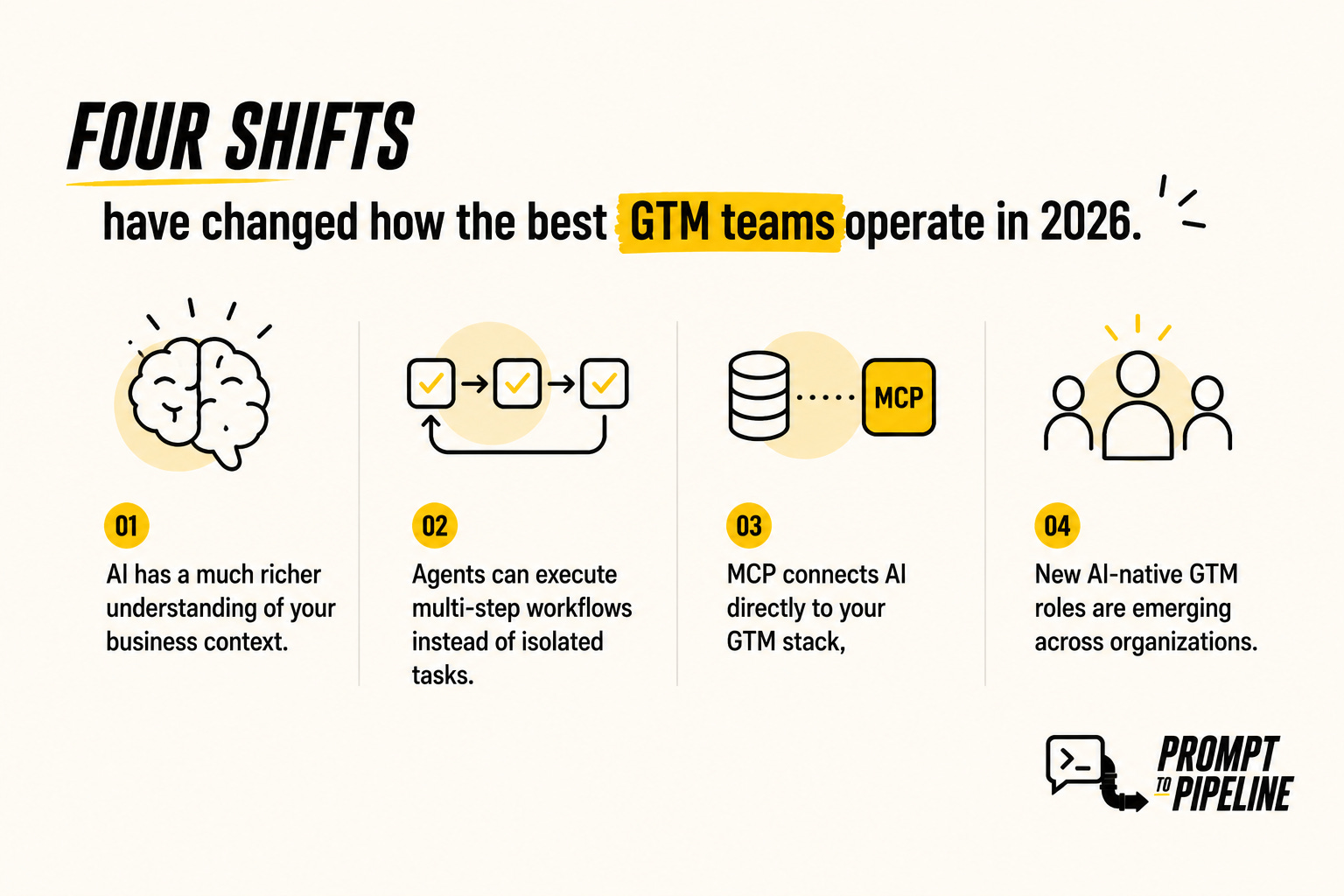
Besides, these four shifts have completely changed how the best GTM teams operate in 2026.
New AI-native GTM roles are emerging across organizations.
AI has a much richer understanding of your business context.
MCP connects AI directly to your GTM stack.
Agents can execute multi-step workflows instead of isolated tasks.
Most importantly, the best teams have stopped thinking in terms of individual plays and started designing systems that continuously sense, decide, execute, and learn
(e.g. automatically prioritizing accounts based on buying signals, generating personalized outreach using CRM and customer research, or identifying upsell opportunities from product usage and customer conversations).
Let’s get into more details below
The Great GTM Reorganization
The old GTM orgs were designed around departments: marketing = demand, sales = opportunities, CS = retention, RevOps = tried to make systems behave ))
AI-native GTM is organized around systems, not functions. The bottleneck is no longer executing work - it’s designing the revenue system itself.
Someone has to define how agents access business context, where humans stay in the loop, which decisions can be automated, and how the system continuously learns from outcomes. In other words, someone has to own the operating model.
We’re already seeing the rise of roles like GTM Engineer, AI GTM Architect, Context Engineer, and AI Ops Lead. Different titles, same responsibility: designing the revenue operating system that humans and AI work inside.
(I’m still waiting for someone to make “Chief GTM Fairy” an official job title)
Context Is the New GTM Infrastructure
AI becomes useful when it has access to real business context AKA sales calls, customer objections, website activity, content performance, strategy docs, customer success notes, onboarding data, etc.
Most teams have more context than they think. Scattered across tools, trapped in call recordings, buried in notes, or stored in someone’s head under the charming label of “tribal knowledge.”
Until it’s organized into a usable context layer, neither your people nor your AI can make consistently better decisions.
Once that context is structured, it becomes useful across your entire GTM motion. Customer research is a great example. Instead of relying on assumptions, AI can analyze what buyers actually say in sales calls, support conversations, interviews, and reviews. Those insights improve messaging, content, segmentation, lead scoring, and sales outreach.
Practical examples:
AI analyzes sales calls to uncover recurring objections and recommends updates to messaging, content, and sales playbooks.
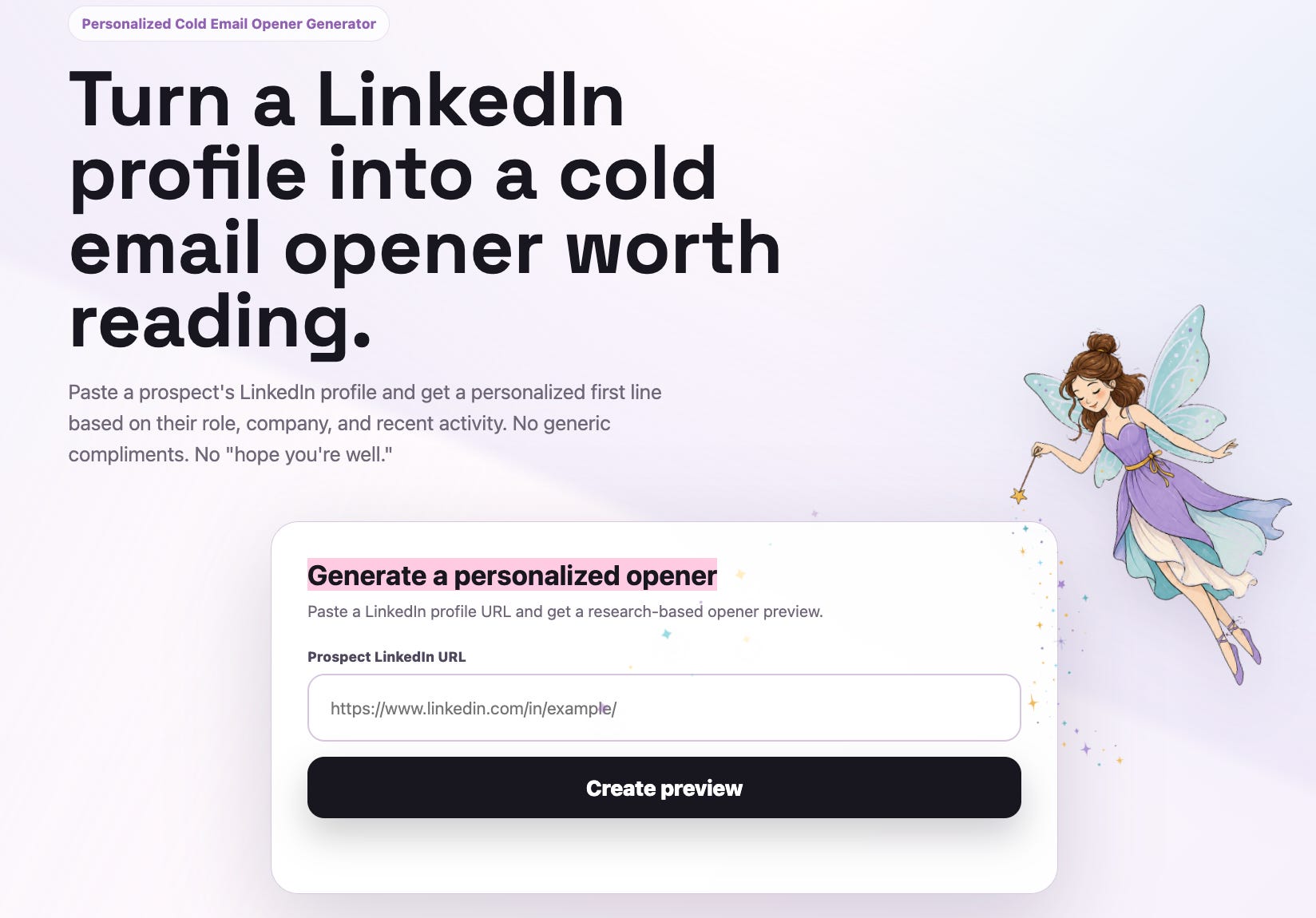
Buying signals, CRM history, and customer research are combined to generate personalized outreach for every target account.
Product usage, support conversations, and renewal data identify which customers are ready for an upsell, at risk of churning, or need proactive support.
Every closed-won and closed-lost opportunity improves lead scoring, ICP definitions, and account prioritization for future deals.
When a champion changes jobs, a company raises funding, or a new executive joins, the system automatically surfaces the opportunity and recommends the next best action.
MCPs connect AI directly to GTM stacks
MCP (model context protocol) become mainstream (think of APIs, but for AI tools).
Most advanced SaaS tools are adding them, so you can connect your AI agnets to theit functionality (makes AI dramatically more useful, but also need a lot of botsitting as they break often - the technology is still new)
With MCP you can copy information between tools or better - your AI agent can work directly with the systems your team already uses.
(e.g. - connect to Notion MCP that clean up/structure docs, organize knowledge, and pull the right context before agent starts working)
Agents can execute multi-step workflows (from plays to micro-campaign systems)
One of the biggest shifts is that AI agents no longer stop after a single task. They can coordinate entire sequences of work (and even rule an army of sub-agents).
Traditional GTM plays were mostly static: define ICP - build list -write message - launch sequence - review performance later - repeat.
In more detail:
2025: Most teams knew warm introductions converted better, but it was manual: someone would search LinkedIn, ask around in Slack, check the CRM, message the founder, and hope somebody knew the right person.
2026: AI agents can continuously map your relationship graph across LinkedIn, CRM, customer history, investor networks, and previous conversations. When a champion changes jobs, a mutual connection appears, or a former customer joins a target account, the system automatically surfaces the opportunity, provides the context, and recommends the next best action.
Even better:
2025: Competitor displacement was mostly reactive. Sales relied on battlecards and only talked about competitors after they came up in a deal. By then, you were already playing catch-up.
2026: AI agents continuously monitor signals like competitor mentions in sales calls, customer reviews, hiring trends, CRM notes, LinkedIn activity, and community discussions. When they detect evidence that a competitor is creating friction, they automatically surface the account, explain why it’s relevant, and generate messaging based on the buyer’s actual pain instead of your internal battlecard.
Or:
2025: Most outbound campaigns were triggered by a single signal, like intent data or a funding announcement. Every account received the same sequence, regardless of whether there was a genuine reason to reach out.
2026: AI agents continuously monitor a variety of signals across your ICP and wait for them to align. When competitor mentions, website activity, hiring changes, CRM insights, and relationship data all point to the same opportunity, the system automatically launches a focused micro-campaign with messaging tailored to that specific buying moment.
The Adaptive GTM™ Framework
With all of these shifts happening at once, it’s easy to get distracted by the latest model, agent, or workflow. But before you build anything, you need a clear way to think about the whole system.
That’s why I put together the Adaptive GTM™ Framework. It’s the mental model I use to design AI-native GTM systems that actually create better decisions, not just more automation.
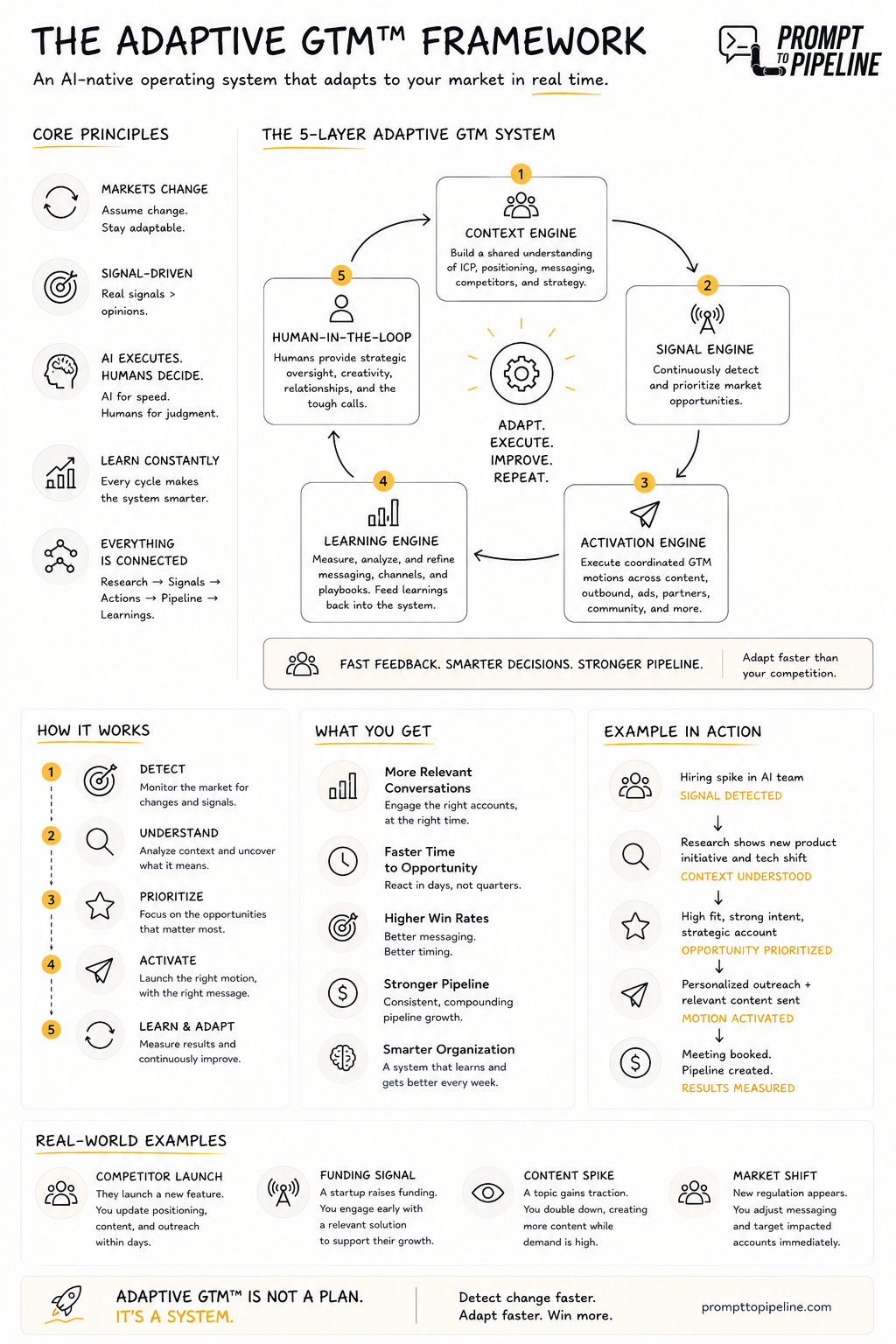
The Adaptive GTM™ Framework is the mental model I use when helping founders and GTM leaders redesign their revenue systems for the AI era. It gives you a structured way to think about how signals become decisions, how context improves execution, and how every outcome makes the system smarter over time. Instead of jumping straight into tools and workflows, you build the foundation first.
I’ve used this framework while designing GTM systems across mature startups and growth-stage companies because the same pattern keeps showing up: teams automate execution before they’ve designed the system underneath it. That’s why the framework starts with signals, context, and decision-making before it gets anywhere near automation.
Whether you’re modernizing one workflow or rebuilding your entire GTM operating model, these five layers provide a practical blueprint for designing AI systems that create better decisions, not just faster execution.
What To Do This Week
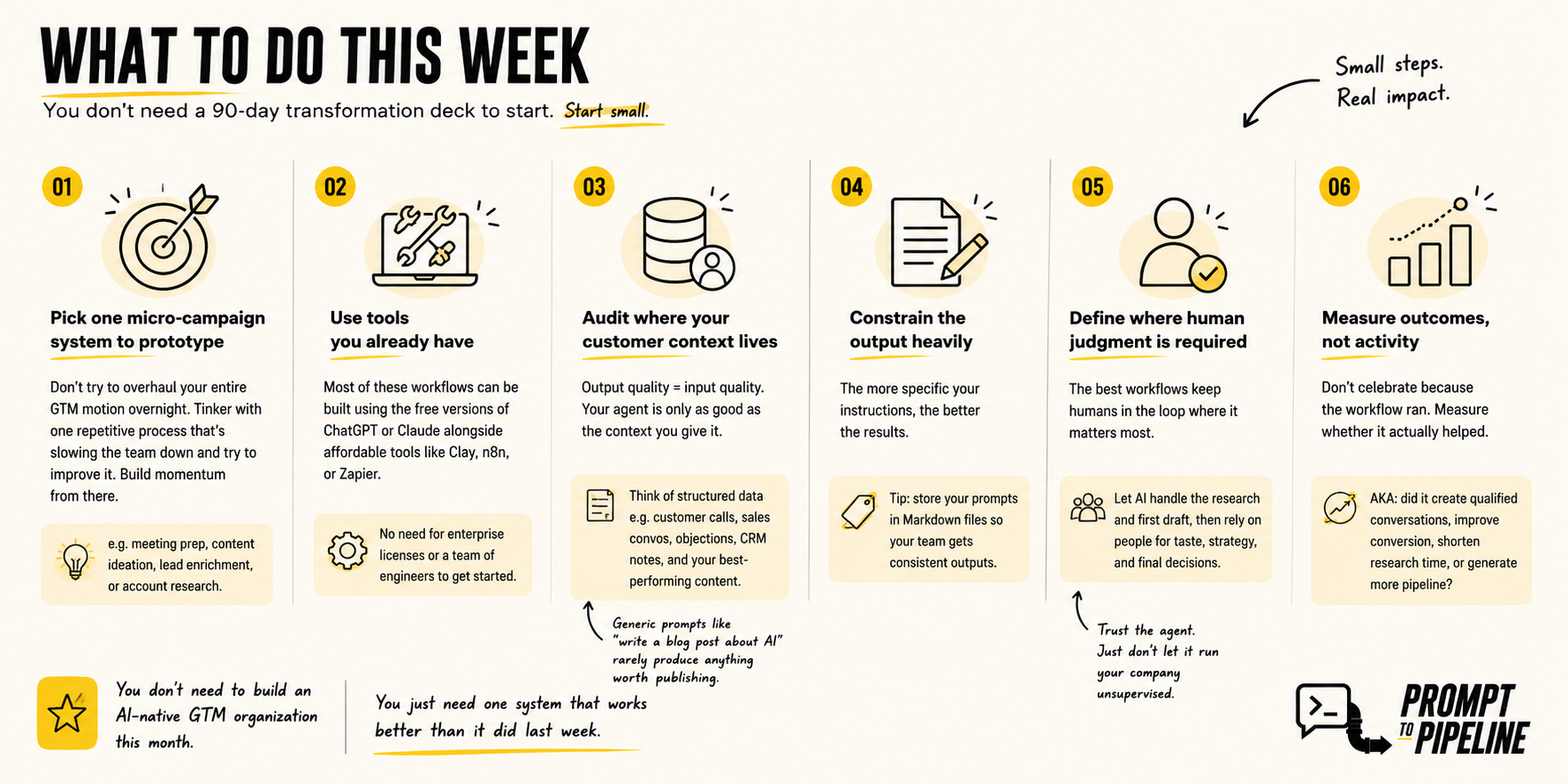
You don’t need a 90-day transformation deck to start. Start small.
1. Pick one micro-campaign system to prototype
Don’t try to overhaul your entire GTM motion overnight. Pick one repetitive process that’s slowing the team down and improve it (e.g. meeting prep, content ideation, lead enrichment, or account research). Build momentum from there.
2. Use the tools you already have
Most of these workflows can be built using the free versions of ChatGPT or Claude alongside affordable tools like Clay, n8n, or Zapier. You don’t need enterprise AI licenses or a team of engineers before you can start experimenting.
3. Audit where your customer context lives
Output quality = input quality. Your agent is only as good as the context you give it. Start collecting structured knowledge (e.g. customer calls, sales conversations, objections, CRM notes, and your best-performing content) before worrying about the next shiny AI tool.
Generic prompts like “write a blog post about AI” rarely produce anything worth publishing.
4. Constrain the output heavily
The more specific your instructions, the better the results. Tell AI what you want, how you want it structured, what to include, and what to avoid. (Tip: store your prompts in Markdown files so your team gets consistent outputs.)
5. Define where human judgment is required
The best workflows keep humans in the loop where it matters most. Let AI handle the research and first draft, then rely on people for taste, strategy, and final decisions. (Trust the agent. Just don’t let it run your company unsupervised.)
6. Measure outcomes, not activity
Don’t celebrate because the workflow ran. Measure whether it actually helped. (AKA: did it create qualified conversations, improve conversion, shorten research time, or generate more pipeline?)
About me
I help founders and GTM teams build or upgrade towards AI-native GTM engines that turn signals, customer context, and AI workflows.
Request GTM Audit
→ 360° assessment + 6-month action plan: Your GTM blindspots revealed
Or